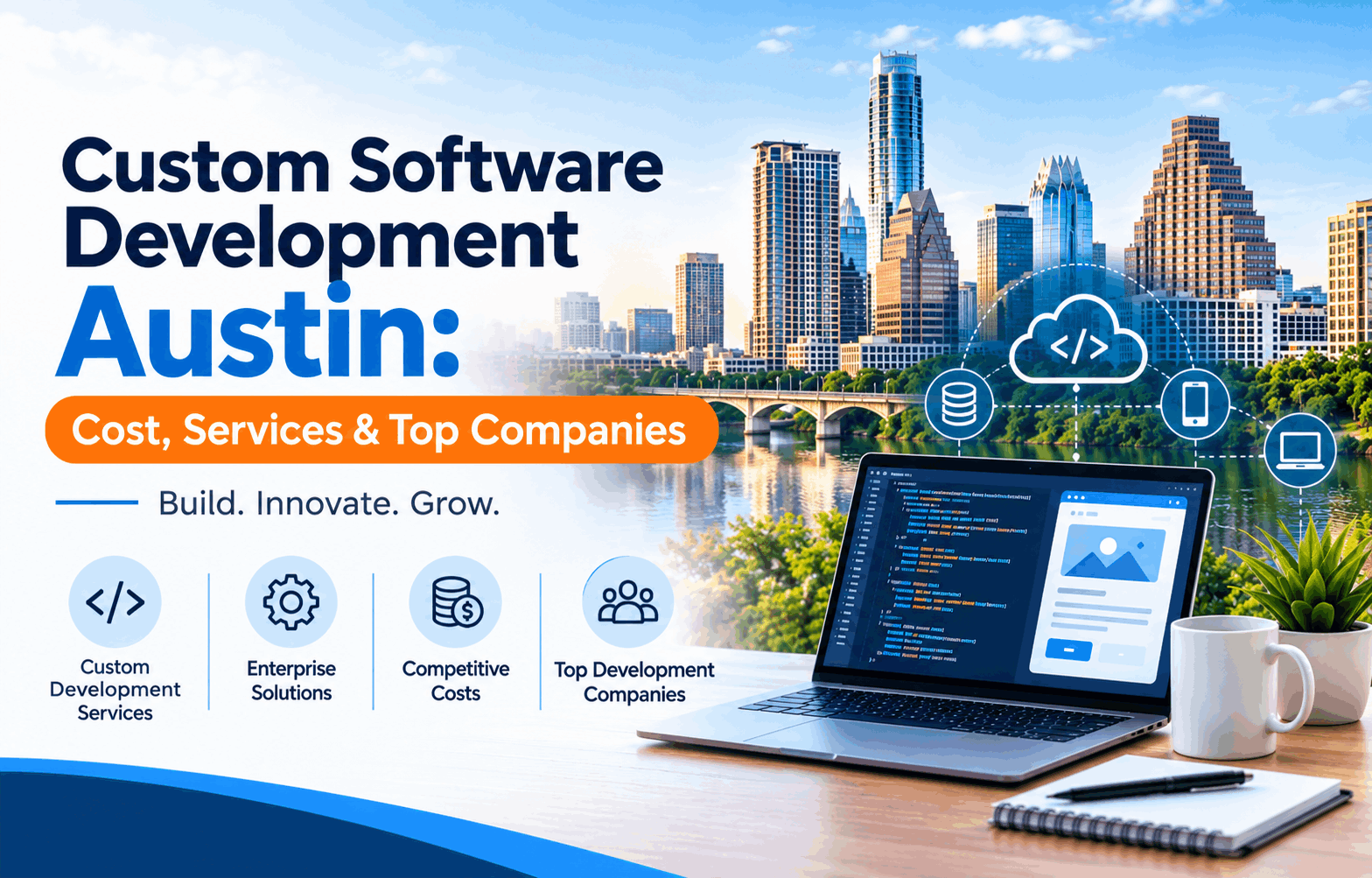
Austin, Texas, has become an important destination for businesses looking to adopt new technologies and improve their digital operations. From startups to established enterprises, companies are investing in software that makes daily operations easier, improves customer experiences, and supports long-term growth.
Ready-made applications may work for basic requirements, but businesses with specific workflows often need something more flexible. This is where custom software development Austin becomes valuable. Custom-built solutions allow companies to create applications around their business requirements instead of changing their processes to fit existing software.
With the right development partner, businesses can build scalable applications, automate operations, and manage complex business activities more efficiently.
Why Do Austin Businesses Need Custom Software Development?
Businesses across Austin operate in competitive industries where technology plays an important role. Companies need software that can manage their operations, connect different departments, and support changing customer expectations.
Custom software provides flexibility that standard applications may not offer. Businesses can choose the features, integrations, and security requirements that match their operations.
For example, a healthcare company may need patient management software, while a retail business may require an inventory management platform connected to its sales system.
Investing in custom software development services also allows organizations to reduce manual work, improve data management, and expand their digital capabilities as the business grows.
Types of Custom Software Development Services
A professional software development partner can build different types of applications depending on business requirements.
1. Enterprise Software Development
Large organizations often manage multiple departments, employees, and business processes. Enterprise applications bring these operations together through centralized systems. These solutions may include ERP platforms, CRM systems, workflow management tools, and business intelligence dashboards.
2. Web Application Development
Custom web applications allow businesses to provide online services, manage customer accounts, and handle business operations through browsers. They can also connect with payment gateways, databases, and third-party platforms.
3. Mobile Application Development
Businesses looking to reach customers through smartphones can invest in custom Android and iOS applications. These apps can include customer portals, booking systems, online shopping features, and real-time notifications.
4. AI-Powered Software Development
AI integration is becoming an important part of modern business applications. Companies can use AI-powered software for automated customer support, document processing, predictive analytics, and intelligent business workflows.
Custom Enterprise Software Development Services for Growing Businesses
As organizations expand, managing operations through separate tools can become difficult. Data may remain scattered across different platforms, creating delays and communication problems.
Custom enterprise software development services address these challenges by connecting business systems through a unified application.
For example, an enterprise platform can connect employee management, customer information, financial reporting, and inventory operations. This gives management teams better visibility into business activities.
Cloud-based architecture, API integrations, and secure databases also make enterprise applications easier to maintain and scale. Businesses can add new features as their requirements change without replacing the entire system.
How Much Does Custom Software Development Cost in Austin?
The cost of developing custom software in Austin depends on the application's complexity, features, technology stack, integrations, and development team's experience.
According to Clutch's 2026 Software Development Pricing Guide, the most common reviewed software development project range is $10,000–$49,999. Its reported average project cost is approximately $132,480, although this average includes larger projects and should not be treated as the expected price for every business.
Some important factors that influence development costs include:
-
Project requirements: Applications with multiple modules and advanced functionality require more development time.
-
UI/UX design: Custom interfaces and user experience design affect the overall budget.
-
Third-party integrations: Connecting payment systems, CRMs, APIs, and other platforms adds complexity.
-
Security requirements: Enterprise applications may require additional authentication, access controls, and security testing.
-
Maintenance: Hosting, upgrades, bug fixes, and ongoing technical support add to long-term costs.
Businesses should request a detailed project estimate before development begins. A clear scope helps avoid unexpected expenses and keeps the project aligned with business goals.
How to Choose the Right Software Development Company in Austin?
Selecting a development partner is an important decision because the quality of the software depends on more than just coding.
Before choosing a company, review its previous projects, technical experience, development process, and client feedback. Check whether the team understands your industry and can work with the technologies required for your application.
Also, discuss project timelines, communication methods, security practices, and post-launch support. A reliable development partner should be able to explain the complete development process, from initial planning to deployment and maintenance.
CloudStakes Technology works across software development, cloud solutions, and AI-driven technology. Businesses exploring development partners can consider a team that understands both application requirements and long-term technology needs.
Conclusion
Custom software gives Austin businesses the flexibility to build applications around their actual operational requirements. Whether a company needs a web platform, mobile application, or enterprise management system, the right development approach can improve efficiency and support future expansion.
Choosing experienced developers, defining clear requirements, and planning for long-term maintenance are essential steps toward a successful project.
CloudStakes Technology focuses on modern software and technology solutions that align with changing business requirements. Explore our technology blogs and insights to learn more about software development, AI, and cloud technologies.
Frequently Asked Questions (FAQs)
1. What are the top-rated custom software development companies in Austin?
Austin has several software development companies offering services for startups and enterprises. Businesses should compare companies based on verified client reviews, technical expertise, industry experience, completed projects, and post-launch support. Platforms such as Clutch can help businesses research providers and compare client feedback before making a decision.
2. What is the average cost for custom software development in Austin?
The cost depends on project requirements, features, integrations, and development complexity. Clutch's 2026 pricing guide reports that the most common reviewed project range is $10,000–$49,999, while its average project cost is approximately $132,480. Actual Austin project quotes may vary considerably.
3. How long does it take to develop custom software?
A simple application may take a few weeks to a few months, while complex enterprise platforms can require several months or longer. Planning, design, development, testing, and integrations all influence the timeline.
4. What industries benefit from custom software development services?
Healthcare, finance, retail, education, manufacturing, logistics, and technology companies can benefit from custom software. These applications help manage industry-specific workflows and improve operational efficiency.
5. What is the difference between custom software and off-the-shelf software?
Off-the-shelf software comes with predefined features designed for general users. Custom software is developed around a company's specific requirements, offering greater flexibility, tailored integrations, and control over functionality.
6. Are custom enterprise software development services suitable for small businesses?
Yes. Small businesses can start with a focused application that addresses their immediate requirements and expand its functionality as operations grow. This approach avoids investing in unnecessary features from the beginning.
7. Does custom software require ongoing maintenance?
Yes. Software needs regular security updates, bug fixes, performance monitoring, compatibility improvements, and feature upgrades. Ongoing maintenance keeps applications reliable and secure as business requirements change.
 EdTech
 FinTech
 Logistics
 Healthcare
 Automobiles
 Manufacturing
 Telecommunications
 InformationTechnology
 About Company
 CEO's Desk
 Global Footprint
 Privacy Policy
 Terms & Conditions
 Support
 Careers
 Refferal Program